


Blog


What is the difference between COQ 10 and quercetin powder?
2026-06-03
Coenzyme Q10 and Quercetinare highly regarded ingredients in natural Antioxidants and dietary supplements. Are they the same thing? What are their unique functions? Today, we'll analyze the differences and connections between these two ingredients in detail.
Are COQ 10 and quercetin the same thing?
No, coenzyme Q10 and quercetin are two completely different substances. Although they both have powerful antioxidant properties and overlap in their cardiovascular protection benefits, their chemical structures, sources, mechanisms of action, and functions in the body are significantly different.
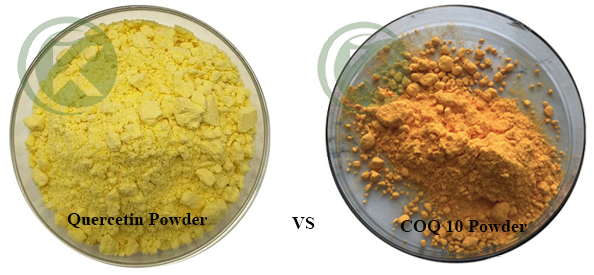
In simple terms: Coenzyme Q10 is a vitamin-like substance that the human body can synthesize on its own. It is mainly found in the mitochondria, the energy factories of the cell, and its core task is to participate in energy production. Quercetin, on the other hand, is a flavonoid compound of plant origin that the human body cannot synthesize and must be obtained through diet (such as onions, apples, tea, red wine, etc.).
What is Coenzyme Q10 powder?
Coenzyme Q10, also known as ubiquinone, is a fat-soluble coenzyme that is naturally present in every cell of the human body, especially in organs with high energy requirements such as the heart, liver, and kidneys.
As a key coenzyme in mitochondrial ATP synthesis, its core function is to drive cellular energy production. It also has antioxidant effects, can repair damaged myocardium, improve vascular endothelial function, and has auxiliary therapeutic value for various cardiovascular diseases such as coronary heart disease, heart failure, and hypertension. As we age, the body's ability to synthesize coenzyme Q10 gradually declines, so it is often used as an important supplement to support energy metabolism and cardiovascular health.
What is quercetin powder?
Unlike coenzyme Q10, which is synthesized endogenously in the human body, quercetin is a natural flavonoid compound derived from plants, widely found in red onions, apples, berries, and various traditional Chinese medicines.
As a potent natural antioxidant, quercetin possesses a variety of biological activities, including anti-inflammatory, anti-allergic, antiviral, antitumor, and immunomodulatory effects, showing great potential in cardiovascular protection, liver health, anti-aging, and the prevention and treatment of chronic diseases. It is important to note that quercetin has poor water solubility, low oral bioavailability, and carries a certain risk of drug interactions.
What are the benefits of COQ10 and quercetin powder?
COQ10 vs Quercetin: Benefits for Antioxidant Properties
✅Oxidative stress caused by reactive oxygen species is a core factor leading to cell damage and various chronic diseases. Studies have shown that quercetin and COQ10 both possess extremely strong antioxidant activity and can significantly reduce DNA damage caused by oxidative stress.
The antioxidant effect of CoQ10 is mainly reflected in its reduced form, ubiquinol. Ubiquinol can directly scavenge lipid peroxide free radicals, protect cell membranes and mitochondrial membranes from oxidative damage, and at the same time, it can regenerate vitamin C and vitamin E, forming an antioxidant network.
Studies have shown that CoQ10 can inhibit the oxidation of low-density lipoprotein and reduce the levels of oxidative stress markers such as malondialdehyde. In the human body, the concentration of CoQ10 decreases with age, and supplementing with CoQ10 can help restore the body's antioxidant defense capabilities.
✅Quercetin exhibits a more diverse antioxidant mechanism. First, its five phenolic hydroxyl groups can directly scavenge hydroxyl radicals, hydrogen peroxide, and superoxide anions. Second, quercetin possesses a strong metal ion chelating ability, capturing Fe²⁺ and Cu²⁺, thereby blocking the Fenton reaction and reducing the generation of harmful free radicals.
Furthermore, it can induce the expression of antioxidant enzymes in vivo by activating the NRF2 signaling pathway. An in vitro study showed that pretreatment of human nasal mucosal cells with 50 μM quercetin significantly reduced hydrogen peroxide-induced DNA damage from 16.6 to 8.1, demonstrating a highly significant antioxidant effect.
The difference between the two is that CoQ10 mainly plays an antioxidant role on the inner mitochondrial membrane, protecting the energy metabolism center; while quercetin is widely distributed in the cytoplasm and extracellular space, directly neutralizing reactive oxygen species through multiple pathways.
COQ10 vs Quercetin: Benefits for Cardiovascular Disease
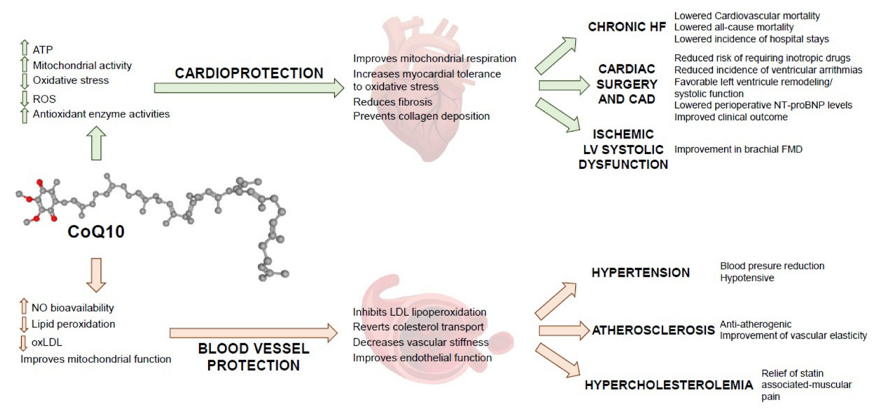
✅As a potent endogenous antioxidant, coenzyme Q10 improves vascular function and lowers blood pressure by reducing the source of reactive oxygen species in the vascular system, inhibiting low-density lipoprotein oxidation, and increasing nitric oxide bioavailability.
Clinical studies have shown that long-term coenzyme Q10 supplementation has a good safety profile, can improve symptoms in patients with chronic heart failure, reduce cardiovascular mortality and hospitalization rates, and significantly improve the prognosis of patients undergoing cardiac and vascular surgeries such as coronary artery bypass grafting. Furthermore, it also has positive effects such as anti-atherosclerotic activity, inhibition of foam cell formation, and relief of muscle pain caused by statins.
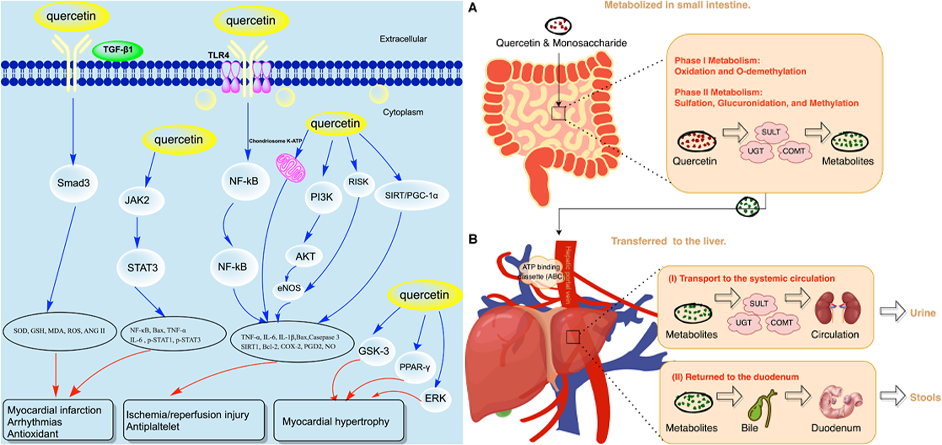
✅As a natural flavonoid, quercetin has multi-target protective effects against cardiovascular diseases. It can directly scavenge reactive oxygen species, chelate metal ions, and inhibit oxidative damage to low-density lipoprotein. Simultaneously, it can regulate multiple signaling pathways, exerting effects such as anti-atherosclerosis, anti-platelet aggregation, lipid-lowering, plaque stabilization, and blood pressure regulation.
In terms of cardioprotection, it can reduce myocardial hypertrophy and fibrosis, improve ventricular remodeling and cardiac function, and has potential preventative and therapeutic value against myocardial infarction, ischemia-reperfusion injury, heart failure, and arrhythmias.
However, due to the poor water solubility and low bioavailability of quercetin, as well as inconsistent clinical trial results, its medicinal value is currently limited to animal and preclinical studies. In the future, multi-center, large-sample randomized controlled trials are still needed to evaluate its safety and efficacy in humans.
Is quercetin better than COQ10?
There's no absolute answer to this question, as the two are not in competition but rather complementary, each with its own focus.
If your goal is to improve cardiac muscle vitality, alleviate chronic fatigue, combat early aging, and support fertility, then CoQ10, which focuses on mitochondrial energy, is clearly a more fundamental choice. For patients with heart failure or those experiencing muscle symptoms while taking statins, the evidence level for CoQ10 is higher.
However, if your focus is on broad-based anti-inflammatory and antioxidant protection, especially for diseases closely related to oxidative stress such as atherosclerosis, myocardial ischemia-reperfusion injury, and hypertension, quercetin's multiple mechanisms of action may offer more comprehensive protection.
Can you take COQ10 and quercetin together?
Both can be taken together and have synergistic benefits.
Both CoQ10 and quercetin are antioxidants, but they act differently: CoQ10 primarily maintains energy metabolism within the mitochondrial inner membrane, while quercetin, as a polyphenol, regulates cell signaling pathways and scavenges various reactive oxygen species.
The combined use of these two substances can synergistically intervene in oxidative stress-related chronic diseases from both the perspectives of "energy metabolism" and "oxidative scavenging," theoretically potentially producing an additive effect.
Although specific clinical trials for their combined use are currently lacking, pharmacological analysis shows no contraindications to interaction. It is recommended to start with a low dose under professional guidance.
Where to buy COQ10 and quercetin powder?
Kintainutri® has over 10 years of experience in the research, development, and export of coenzyme Q10 and quercetin. We strictly adhere to international quality management system standards and are committed to providing customers with high-purity, stable-quality raw materials that meet the standards of multiple pharmacopoeias.
Our Coenzyme Q10 powder is produced using advanced fermentation technology, achieving a purity of over 99%. Our quercetin is selected from high-quality sophora japonica flowers extract and is available in 95% and 98% purity levels. Heavy metal and solvent residues are strictly controlled. Furthermore, we can provide customized services to fully meet your product development needs.
In conclusion, both Coenzyme Q10 and quercetin are excellent natural antioxidants. Only by understanding their respective characteristics and differences, and making informed choices or scientific combinations based on your own health needs, can they truly better protect your overall health.
For high-quality Coenzyme Q10 or quercetin supplement raw materials, please contact us to request samples and enjoy preferential pricing.
Reference: